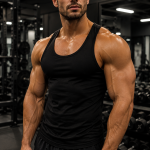


Let’s be honest, the fitness world can feel like a maze of shiny objects. We are bombarded with 30-day shred challenges, complicated machines that look like medieval torture devices, and Instagram workouts that require a degree in gymnastics. You might find yourself asking, “Should I be doing HIIT, Pilates, powerlifting, or just running until my knees beg for mercy?” What if I told you there’s a simpler, smarter, and far more sustainable way to train? This is not about punishing your body to look good on the beach for one week; this is the ultimate guide to functional fitness, a methodology that prioritizes moving better, feeling stronger, and building an unbreakable body in the gym so you can dominate life outside of it. If you’re tired of random workouts and want a logical, science-backed, purposeful way to train for longevity, you are in the right place. We are going to strip away the fluff and dive deep into the training philosophy that mimics the way your body is actually designed to move.
We are moving away from the “mirror muscles” and the isolated, seated leg curl machines. Instead, we are embracing a training style that teaches you to push, pull, squat, hinge, and rotate as a single, integrated unit. This is the ultimate guide to functional fitness—a comprehensive, evergreen resource that will change how you think about strength forever. We’ll explore the heavy-hitting science that proves why ditching the machines for free movement is the best thing you can do for your joints, decode the seven primal movement patterns that form the blueprint of human anatomy, and bust the stubborn myth that this style of training is just for elite athletes or the over-70 crowd. Whether you are an absolute beginner who can’t touch your toes, an office warrior with a cranky lower back, or a seasoned athlete looking to break through a plateau, this post is your roadmap. We will lay out a step-by-step blueprint for getting started, highlight the non-negotiable exercises that give you the most bang for your buck, and provide sample routines that scale from complete novice to advanced daredevil. Forget training for the mirror; let’s build a body that works for real life.
Why the Old Model of Fitness is Failing You
To understand where we are going, we have to look at where modern fitness went wrong. Walk into any commercial gym in America. The layout tells a story. You’ll see a sea of machines arranged in neat rows: the leg press, the pec deck, the smith machine. These machines were popularized in the 1970s and 80s, not necessarily because they were superior for human biology, but because they were a brilliant business model. Arthur Jones, the inventor of Nautilus machines, wanted to create a system where a user could move through a circuit quickly without needing a highly skilled coach. The machine dictated the path of motion, effectively turning the body into a passive passenger.
Here lies the fundamental problem: life is not a stabilized, seated, single-joint activity. Your body was not designed to operate in isolated blocks. It is a kinetic chain, a beautifully complex system of pulleys and levers where everything is connected. When you sit down on a leg extension machine and isolate the quadriceps, you remove the stabilizing role of the hip abductors, the core, and the hamstrings. You might build a beefy quadricep, but you are teaching the nervous system a dysfunctional pattern—that the foot and hip can just “check out” while the knee does all the work.
This creates what physical therapists call “pattern overload” and “sensory motor amnesia.” Your body forgets how to coordinate movement because the machine has been doing the coordination for you. The ultimate guide to functional fitness explains that true strength isn’t about how much you can lift in a contrived environment; it’s about how well your nervous system can recruit muscles to solve the unpredictable puzzle of the physical world. Traditional weight training often isolates muscles to create hypertrophy (growth), which is fantastic for bodybuilding, but functional fitness trains movements to create usable, integrated strength. You’re not just training muscles; you’re training the neural networks that command them. If you’ve ever thrown your back out bending down to pick up a pencil—after years of deadlifting heavy weights with a barbell—it’s likely a disconnect between raw hardware and functional software. Your muscles are strong, but your movement patterns are bankrupt.
The Heavy Science: Neuroplasticity and Movement Encoding
Don’t let the phrase “functional” fool you into thinking this is fluffy, light-weight training for the elderly. This is heavy science rooted in biomechanics and neurology. The central nervous system (CNS) is the command center. When you perform a complex, multi-joint movement like a Turkish Get-Up, you are not just burning calories. You are firing a cascading sequence of neurological events that create “motor engrams”—a fancy term for a stored pattern of movement.
A landmark study often cited by functional fitness advocates is the biomechanics research regarding the kinetic chain, specifically the “serape effect.” The human body is wrapped in diagonal lines of fascia and muscle, like a figure-eight or a serape blanket. When you walk, throw a baseball, or swing a kettlebell, force is not generated locally; it spirals through the core. Training on isolated machines ignores these cross-body patterns entirely. Functional training, conversely, hardwires this sling system.
A 2016 systematic review published in the Journal of Physical Therapy Science examined the effects of functional training versus traditional resistance training on physical fitness determinants. The review concluded that functional training demonstrated significant improvements in speed, muscular power, balance, and agility—components of fitness that traditional heavy resistance training often fails to address optimally. Another critical study published in the Journal of Strength and Conditioning Research compared unstable surface training (a component of functional fitness) to stable surface training. It found that while stable surfaces are better for absolute maximal force production, functional, unstable-load exercises (like performing a push-up with rings) dramatically increase core muscle activation and spinal stability. You are essentially trading pure mechanical load for neurological complexity. This doesn’t mean you should never lift heavy; it means you should understand the tool you’re using. Heavy bench pressing teaches you to produce massive force. Ring push-ups teach you to control your body through space while that force is being challenged. The ultimate guide to functional fitness is about integrating both, but always rooting your program in the latter.
Decoding the 7 Primal Movement Patterns
The human body speaks a universal language of movement. Before we had barbells and Bosu balls, we had to run from predators, climb for fruit, and carry water from the river. By deconstructing athleticism into its base components, we get a diagnostic tool to see where our bodies are broken. A balanced functional fitness program ensures you are proficient in all seven of these patterns.
1. The Squat
The squat is the foundation of sitting and standing. It involves ankle dorsiflexion, knee flexion, and hip flexion. If you can’t perform a deep, resting bodyweight squat, it signals a systemic mobility deficit somewhere in the posterior chain. This isn’t just a leg exercise; it’s a vital sign of biomechanical health. The functional squat isn’t about a barbell on your back; it starts with a goblet squat, which places the load in front of the body, forcing the core to engage and maintaining an upright torso—exactly how you’d lift a heavy box.
2. The Hinge
We must distinguish between a squat and a hinge. A squat is knee-dominant; a hinge is hip-dominant. The deadlift pattern is the quintessential hinge. It teaches you the most underrated skill in modern fitness: loading the posterior chain (glutes and hamstrings) while sparing the lower back. In our chair-bound society, we become quad-dominant and glute-amnesiac. The hinge wakes up the engine. Functional fitness uses kettlebell swings and single-leg Romanian deadlifts to drill this pattern, teaching you that your spine is a rigid lever, not a bending noodle.
3. The Lunge
Life is rarely bilateral (two-footed). The lunge is a single-leg, cross-body pattern that mimics walking, running, and climbing stairs. It’s a dynamic balance drill that exposes asymmetry. If you can squat 300 pounds but fall over doing a reverse lunge, you have a massive functional deficit. The lunge teaches deceleration—the ability to absorb force eccentrically. This is crucial for injury prevention; most ACL tears don’t happen when jumping, but when landing.
4. The Push
We break this into vertical pushing (overhead press) and horizontal pushing (push-up). Functional fitness generally favors the push-up over the bench press as a foundational standard. Why? A push-up requires a rigid plank position; the glutes must fire, the core must brace, and the scapulae must move freely. The bench press staples your scapulae to a pad and removes the core entirely. Mastering a perfect, hollow-body push-up is a higher-quality feat of strength than a sloppy bench press.
5. The Pull
Just as with pushing, we have vertical pulling (pull-ups, lat pulldowns) and horizontal pulling (rows). Our modern lifestyle rounds our shoulders forward (kyphosis). The pulling pattern is the antidote. Functional fitness emphasizes the inverted row because it teaches relative strength (moving your body through space) and postural integrity. In an inverted row, you cannot cheat with momentum; your body is a straight plank, and you must pull the chest to the bar, fighting gravity and poor posture.
6. The Rotation (and Anti-Rotation)
This is the forgotten plane of motion. The sagittal plane (front-to-back) dominates gym culture. But life happens in the transverse plane (rotational). Throwing a ball, swinging a golf club, putting a suitcase in an overhead bin. Functional training distinguishes between rotational power (medicine ball throws) and anti-rotational strength (Pallof press). Anti-rotation is the ability to resist an external force trying to twist you off your axis. This is core stability in its truest form, not doing endless crunches.
7. Loaded Carries (Gait)
Walking with a load is the most primal display of functional strength. The farmer’s carry—picking up a heavy weight in one or both hands and walking—does not require technical skill, yet it exposes every weakness. Grip strength, shoulder stability, lateral hip stability, and posture all scream for attention. Research has directly linked grip strength, a direct proxy for general strength trained by carries, to all-cause mortality. A study in The Lancet followed 139,691 adults and found that a decrease in grip strength was a stronger predictor of death than systolic blood pressure. If you aren’t carrying heavy things, you are missing a vital human function.
The Fundamental Toolbox: Kettlebells, Bodyweight, and Suspension
You don’t need a $5,000 squat rack to pursue the ultimate guide to functional fitness. The tools are beautiful in their minimalism. The kettlebell sits as the king of functional implements. Unlike a dumbbell, the center of mass is offset from the handle. This creates a “virtual force vector” that pulls you off balance, forcing your stabilizers to work overtime. The kettlebell swing is not a squat; it’s a ballistic hinge—a masterclass in explosive hip drive and neural firing rate.
Suspension trainers (like TRX) utilize gravity and leverage to destroy the ego. Suddenly, a standard row becomes desperately hard because you are battling instability. This teaches “irradiation”—a neurological phenomenon where contracting one muscle group causes the surrounding muscles to fire. Squeezing the straps during a row sends a neural overflow signal to the lats and core, creating full-body tension.
And then there is bodyweight mastery. The ability to manipulate leverage is the hallmark of functional control. An archer push-up isn’t just a show-off move; it teaches unilateral force production under immense anti-rotational demand. The goal of functional training is not to add infinite weight to the barbell; it is to advance the complexity and stability challenge of the same movement pattern. You should be able to move from a two-arm plank to a single-arm plank; from a squat to a pistol squat; from a deadlift to a single-leg deadlift. Mastery over your own mass is the ultimate insurance policy against the entropy of aging.
Busting the Biggest Myths (No, You Won’t Get Bulky or Injured)
We need to clear the air. The term “functional fitness” has been hijacked by extreme sports on one side and physical therapy clinics on the other. Let’s address the elephant in the room: the fear of injury.
Myth 1: “Functional Fitness is dangerous; I see people flipping tires and getting hurt.”
This confuses the tool with the intent. Flipping a heavy tire without the prerequisite conditioning is reckless—but so is deadlifting 400 pounds with a cat-back spine. The methodology itself isn’t dangerous; bad programming is. True functional fitness follows a logical progression: mobility first, then stability, then strength, then power. You should not touch a plyometric box jump before you can stick a perfect landing on a squat. A quality program doesn’t rush to the sexy, explosive drills. It spends months on the “boring” groundwork of joint centration and motor control. When applied correctly, this training is the cure for chronic pain, not the cause.
Myth 2: “I want to build muscle, not just do physio exercises.”
This is the vanity trap. If your goal is hypertrophy (muscle growth), you must expose muscles to mechanical tension and metabolic stress. Functional fitness, using compound movements, is extraordinarily efficient at this. Think about a ring dip. This exercise places the shoulder in a natural, free-moving arc, allowing for deep stretch and intense contraction under massive instability. It builds dense, chiseled triceps, chest, and deltoids far more effectively than a fixed-path machine. Furthermore, functional training builds the shoulders that look wide and capped because it develops the rotator cuff and scapular stabilizers, not just the anterior deltoid. Machines build puffy, showy muscle that often lacks true tone. Functional fitness builds a body that looks athletic because it is athletic.
Myth 3: “It’s only for old people or injury rehab.”
This is the most damaging myth. Young, healthy athletes need this most to stay healthy. Look at the ACL epidemic in youth female soccer. Many of these injuries occur because of poor landing mechanics—the knee collapses inward (valgus collapse) due to weak glute medius muscles and poor deceleration patterns. Functional training explicitly programs single-leg work, lateral movement, and landing mechanics. It is pre-habilitation. It’s what allows professional athletes in traditional sports to remain on the field. Adding functional strength work to a powerlifter’s routine breaks plateaus. Adding it to a marathoner’s routine fixes IT band syndrome. This is the “ultimate guide to functional fitness” for athletes and desk workers alike; it bridges the gap between physio rehab and raw powerlifting.
The Functional Fitness Assessment (Do This Before You Touch a Weight)
Before you load a movement, you must own the position. This is the non-negotiable step that 90% of people skip. The following baseline tests will humble you and give you your starting point. Do not treat these tests as a workout; treat them as a diagnostic conversation with your body.
1. The Resting Air Squat Test
Stand with feet shoulder-width apart. Squat down as deep as you can, aiming to get your hips below your knees, heels glued to the floor, chest up. Hold this bottom position for 30 seconds. You are not ready to load a squat until you pass this test.
2. The Dead Bug
Lie on your back, arms pointing straight up to the ceiling, legs in a 90/90 position (knees above hips). Flatten your lower back completely against the floor by tilting your pelvis (imagine protecting a bug under your back). Slowly extend your right arm overhead and left leg toward the ground, exhaling all the way. Don’t let the back pop up. If your lower back arches off the floor the moment your limbs move, your deep core stabilizers (transverse abdominis) are offline. Loading a deadlift in this state is dangerous. You must master intra-abdominal pressure on the ground before standing.
3. The Active Straight Leg Raise
Lying on your back, one leg straight, one leg raised high with a dorsiflexed foot. This tests hamstring and posterior chain mobility without spinal compensation. A functional human should be able to raise a straight leg close to 90 degrees without the opposite leg lifting off the floor or the knee bending.
These screens, derived from principles of the FMS (Functional Movement Screen), tell you the truth. If you can’t stabilize your spine in a static position, you have no business moving it under dynamic load. The ultimate guide to functional fitness requires you to leave your ego at the door and clean up these patterns first.
The Core of the Program: Non-Negotiable Movements
Once cleared, your training should revolve around the “Big Five” functional exercises. These aren’t just random lifts; they are the highest-leverage movements for real-world carryover.
The Goblet Squat Curl (The Loading Combination)
Forget the back squat to start. Hold a kettlebell or dumbbell vertically against your chest. Curl the weight up, but keep it clamped. This forces you to brace the core as if you’re holding a heavy child. Now squat. The goblet position literally teaches your body the correct geometry of the squat. It pulls you forward just enough to activate the posterior chain while demanding thoracic extension. If your upper back rounds, the bell drops.
The Suitcase Carry (Unilateral Stability)
Grab a heavy dumbbell in one hand. Walk 50 feet. Don’t lean. Your body will want to side-bend away from the weight. Fight it. The quadratus lumborum and obliques on the opposite side have to fire like crazy to keep the pelvis level. This anti-lateral flexion strength is what keeps your hips healthy and your spine neutral when you’re carrying groceries, moving furniture, or simply walking with a heavy bag.
The Hip Hinge Base: Kettlebell Deadlift
Before swinging, you must learn to hinge. Place a kettlebell between your feet. Push your hips back like you’re closing a car door with your butt. Keep a proud chest. Once your hamstrings scream, hook the bell and stand up by squeezing the glutes. This teaches the hip-driven pattern necessary for safe picking up of anything from the floor.
The Inverted Row (The Shoulder Savior)
Set a bar at waist height. Lie under it and pull your chest to the bar, body in a rigid plank. This teaches the lats and rhomboids to fire hard, pulling the shoulder blades into the back pockets. For every set of pushing (push-ups) you do, you need at least an equal amount, if not double, the pulling volume to fix the office-worker hunch.
The Turkish Get-Up (The King of Movement)
Many call this the single best functional exercise in existence. Lying on the ground, you hold a weight overhead and stand up, then reverse the movement. It takes nearly 30 seconds of tension to complete one rep. It requires shoulder stabilization, hip mobility, thoracic rotation, and glute drive. It teaches you to own every inch of your range of motion. If you have a cranky shoulder, the light get-up is often the rehab.
A Step-by-Step Blueprint for Beginners (Weeks 1-8)
You cannot skip steps. The body adapts to stress, but connective tissue adapts slower than muscle. If you rush, you get tendonitis. Here is the roadmap for your first two months.
Phase 1: Motor Patterning (Weeks 1-4)
Goal: Grease the groove, not break the muscle.
Frequency: 3 days a week, full-body.
Intensity: Zero failure. Every rep should look like a flawless video.
- *Warm-Up (15 mins):* Foam roll thoracic spine. Hip flexor stretching (critical because of sitting). Crocodile breathing (reset the diaphragm).
- A. Dead Bug: 3 sets of 10 slow reps per side. Master the anti-extension.
- B. Goblet Squat to Box: Find a box just above parallel. Squat to the box lightly, maintaining tension. 3 sets of 10. This teaches depth control without fear.
- C. Inverted Row: 3 sets of 8. If too hard, bend knees; if too easy, straighten legs.
- D. Push-Up (Elevated Hands): Place hands on a box or bench. 3 sets of 8. Lower the height over 4 weeks until you reach the floor.
- E. Kettlebell Deadlift: 3 sets of 10. Light weight. Focus purely on the hip hinge geometry.
- F. Suitcase Carry: 3 trips of 40 feet per side. Moderate weight.
Phase 2: Foundational Strength (Weeks 5-8)
Goal: Add load and proprioceptive demand.
Frequency: 3 days a week.
- A. Goblet Squat (No Box): Full depth. 4 sets of 8. Heavier bell.
- B. Single-Arm Floor Press: 3 sets of 10/side. This teaches shoulder stability under load without the risk of a bench.
- C. Half-Kneeling Pallof Press: 3 sets of 8 per side. Anti-rotation mastery. Force presses straight out from chest; do not let the cable pull you.
- D. Double Kettlebell Romanian Deadlift: 3 sets of 10. Hinge under control.
- E. Farmer’s Carry (Bilateral): Heavy as possible. 4 trips of 40 feet. Grip and rip.
During these 8 weeks, you are building the operating system. The muscle you build is dense, the tendons are robust, and your resting posture is completely different.
The Intermediate Athlete: Introducing Power and Complexity
After 2-3 months of disciplined base-building, you earn the right to explode. The intermediate phase introduces the three pillars of advanced functional fitness: power development, dynamic stability, and kinetic linking.
Power: The Kettlebell Swing
The swing is ballistic, meaning it’s powered by a rapid contraction and ends with a floating, weightless bell. It’s the gateway to explosive hip power. The queue is not “lift the bell with the arms”; it’s “snap the hips and launch the bell forward.” Eccentric loading is rapid. This builds the posterior chain like nothing else, teaching deceleration. Aim for sets of 10-15 powerful reps, stopping well before form deteriorates. A study in the Journal of Strength and Conditioning Research found that kettlebell swing training significantly improved vertical jump height and power output in athletes, rivaling Olympic lifting protocols but with a much lower technical barrier to entry.
Dynamic Stability: The Renegade Row
Get into a push-up position holding two dumbbells. Row one weight to your hip while holding a rigid plank. This is anti-rotation on steroids. Your core must fight the twisting torque. This builds the specific strength needed for crawling, climbing, and any activity where one arm is moving while the other is bracing.
Kinetic Linking: Medicine Ball Slam
This is the ultimate stress reliever. Pick a heavy slam ball, raise it overhead, stand tall on your toes, and then violently slam it into the ground. You are linking triple extension (ankles, knees, hips) with the upper body. It trains the neuro-muscular system to transfer force from the ground, through the core, and out the arms—the fundamental sequence of throwing a punch, swinging a bat, or chopping wood.
Programming for the Masters Athlete (The 40+ Strategy)
Functional fitness isn’t just for the young. It is the fountain of youth, but the approach must shift. After 40, the anabolic hormones (testosterone, growth hormone) naturally decline, and recovery capacity drops. But the game is far from over. In fact, this is where the ultimate guide to functional fitness becomes a non-negotiable survival tool.
The primary goal shifts from PRs (personal records) to maintaining power output, bone density, and Type II (fast-twitch) muscle fibers. You don’t “slow down” because of age; you slow down because you stop training for speed. You must continue to use explosive movements, but the volume drops and the recovery increases.
The 40+ Rules:
- Ditch the Junk Miles: Chronic steady-state cardio elevates cortisol, a catabolic hormone that eats muscle. Replace long jogs with low-intensity walking (parasympathetic recovery) and short, explosive bursts (swings, medicine ball work).
- Train the Hips: The #1 cause of nursing home admission is a broken hip, often from a fall. The mechanism? The inability to produce force rapidly enough to catch yourself (power). Train single-leg hip power. Step-ups with a driving knee are non-negotiable.
- Isometrics for Tendons: Tendons lose elasticity. Add isometric holds to the bottom of a lunge or the top of a pull-up to strengthen the collagen matrix.
- Floor-Based Living: The “sit-to-stand” test is a predictor of all-cause mortality. Spend more time on the floor practicing Turkish Get-Ups and crawling. If you can’t get up off the floor without using your hands, your functional age is dangerously high. Regular practice reverses this.
Nutrition for Functional Performance (Not Just Aesthetics)
A high-performance engine requires high-quality fuel. The standard bodybuilding diet of “chicken and broccoli” six times a day is not optimal for the functional athlete who needs mobility, joint health, and explosive energy. The focus shifts to reducing systemic inflammation and supporting the fascial network.
Hydration and Fascia: Fascia, the connective tissue that wraps every muscle, is 70% water. Dehydrated fascia becomes brittle and sticky, limiting your range of motion far before “tight muscles” do. You can stretch all day, but if you’re chronically dehydrated, your sliding surfaces are glued together. Water is a performance enhancer.
Collagen and Gelatin: Isolated machine training doesn’t stress connective tissue much. But the high-tension, plyometric nature of functional fitness places specific demands on ligaments and tendons. Consuming bone broth or hydrolyzed collagen peptides about 30-60 minutes before training can saturate the blood with the building blocks of collagen, potentially increasing the rate of tendon repair. This is a targeted nutritional strategy for joint resilience.
Anti-Inflammatory Omega-3s: Functional training produces inflammation—it’s how you adapt. But chronic low-grade inflammation kills your recovery. Prioritize wild-caught salmon, sardines, and walnuts to keep your cellular membranes fluid and responsive.
Carb Timing: You don’t need a massive “carb load” for a functional session, but you do need sufficient glycogen to fuel high-intensity swings and carries. A diet rich in sweet potatoes, oats, and white rice around your training window ensures the CNS has the glucose it requires to fire rapidly. A functional athlete doesn’t fear carbs; they weaponize them for performance.
The “Prehab” Arsenal: Fixing the Hips and Shoulders
Injuries are not random events; they are predictable consequences of accumulated dysfunction. The pillar post wouldn’t be complete without your “prehab” checklist—exercises to sprinkle into your warm-up.
For the Shoulders: The Hanging Sequence
The human shoulder needs brachiation (hanging). Grab a pull-up bar and just hang. Let the muscles of the upper back relax while the lats and pecs stretch. Then, move into an active hang—pull your shoulders down away from your ears (scapular depression). This creates space in the sub-acromial joint, preventing impingement. Hang daily. It is the equivalent of flossing for your rotator cuff.
For the Hips: The 90/90 Stretch
Sit on the floor. One leg in front of you bent at 90 degrees (shin parallel to your hips), the other leg out to the side bent at 90 degrees. This is the 90/90 position. Sit tall and then hinge forward toward the front shin. This targets the deep glute muscles (piriformis) and the internal/external rotators of the femur. Our hips are frozen in a seated, neutral position for 8 hours a day. The 90/90 opens the joint capsule.
For the Ankles: Banded Distraction
Tight calves and limited ankle dorsiflexion shut off your glutes. Wrap a heavy resistance band around a rig, step into it so it’s pulling your ankle joint forward, and then drive the knee over the toe. This mobilizes the talus bone.
A Full 3-Day Sample Routine
This is the “do-forever” plan. It balances push/pull, squat/hinge, and unilateral/bilateral work.
Day 1:
- Warm-Up: Dead Bugs, Goblet Squat prying (spend time in the bottom), Hanging Shoulder retractions.
- A. Kettlebell Swing: 5 sets of 15 reps. Explosive hips, packed shoulders. Rest as needed to ensure max power.
- B. Half-Kneeling Single-Arm Overhead Press: 3 sets of 10 per side. Kneeling eliminates leg drive and exposes core instability.
- C. Suitcase Deadlift: 3 sets of 8 per side. Hinge on one leg, holding the weight on the same side. The anti-lateral flexion challenge is massive.
- Finisher: Farmer’s Walk: 3 maximal distance trips. Crush the handle.
Day 2:
- Warm-Up: 90/90 Hip Stretch, Spiderman Lunge with rotation.
- A. Double Kettlebell Front Squat: 4 sets of 6. Rack two bells in the front rack position. Elbows high, torso upright. This exposes thoracic mobility.
- B. Ring or Inverted Row (Elevated Feet): 4 sets to near failure. Squeeze at the top for 1 second.
- C. Single-Leg Glute Bridge (Foot Elevated): 3 sets of 15. Hold the top for a 3-second squeeze. Fixes the glute amnesia.
- Finisher: Sled Push/Pull: Low impact, high demand metabolic work.
Day 3:
- Warm-Up: Active Straight Leg Raises, Bear Crawl (forwards and backwards).
- A. Turkish Get-Up: 10 minutes of practice. Alternate sides. Focus on the sweep of the leg and the windshield wiper motion.
- B. Renegade Row: 4 sets of 6 per side. Perfect plank, no hip rocking.
- C. Rotational Med Ball Throws: 4 sets of 8 per side. Focus on hip rotation, not just arm swing.
- Finisher: Cross-Body Carry (one hand overhead, one at side) or Suitcase Carry. Walk until the grip fails.
Tracking Progress Without the Scale
The scale is a liar when you’re doing functional fitness. You may gain 5 pounds of dense muscle and bone density and lose inches. The mirror lies based on your lighting and your lunch. You need objective performance metrics.
The New PRs (Performance Records):
- Time Under Tension: Can you hold a hollow body hold for 2 minutes? (Last month it was 1 minute).
- The 5-Minute Snatch Test: How many snatches can you do? This tests work capacity.
- The Carry Distance: Did you carry the 32kg bell 100 feet without dropping it?
- Resting Heart Rate: As your functional capacity improves, your parasympathetic tone (recovery) improves. A dropping RHR indicates a more efficient heart.
- Subjective Daily Pain: Rate your stiffness in the morning from 1-10. Functional fitness drives this number toward zero.
Conclusion: Your Move
We’ve covered the biomechanics, shattered the myths, and laid out the roadmap. Now, the responsibility shifts to you. The fitness industry wants you to stay confused, to keep hopping from one extreme program to the next, buying supplements and magic solutions. But the ultimate guide to functional fitness isn’t a secret. It’s a return to your biological roots. It’s the recognition that your body is an integrated system that thrives on varied, practical, and purposeful movement.
Don’t wait for the perfect plan. Start with the assessment. See if you can sit in the bottom of a squat today. Hang from a bar. Carry something heavy. Notice how your body responds when you stop isolating it and start connecting it. This path isn’t about punishing yourself into shape; it’s about upgrading your human operating system so you can kayak, hike, play with your kids, and carry your groceries without a second thought. Build a body that doesn’t just look capable but is deeply, resiliently capable. It’s time to stop training for the mirror and start training for life. Your functional future begins right now.